Cafe and restaurant owners across Australia are ordering branded aprons for a simple reason: staff uniforms are the cheapest, most-seen advertising a hospitality business owns, and a generic black apron from a catering supplier does nothing for brand recall. This guide breaks down what actually matters when you're sourcing custom aprons for cafes and restaurants in 2026, plus which styles suit which stations.
- Cross-back bib aprons are the safe pick for baristas working long shifts in 2026 — buy them.
- Waist aprons suit front-of-house staff who need speed over coverage — consider them.
- Screen-printed logos crack on polyester within months; embroidery holds up on custom aprons for cafes.
- Waterproof aprons belong at the dish pit and bar, not on the coffee machine — skip them for baristas.
Why this matters
An apron is the one piece of uniform every customer sees up close, at the till, at the table, at the counter. Get the fabric wrong and staff sweat through it by 11am. Get the branding wrong and your logo peels off after ten washes. High Quality Promo works with cafes and restaurants ordering custom aprons in bulk, and the same four or five mistakes show up on repeat orders every year.
Most operators buy aprons once, then reorder the same style two years later out of habit rather than checking whether it still fits how the floor actually runs. That's the gap this guide closes.
Who this is for
This is written for cafe owners, restaurant managers and hospitality group operators in Australia placing a bulk order of 20 to 500+ custom aprons for cafes and restaurants — whether that's a single-site espresso bar kitting out five baristas or a multi-venue group standardising uniforms across kitchen, floor and bar staff. If you're choosing between apron styles, fabric weights, and print versus embroidery, read on.
What to look for in custom aprons for cafes
Fabric weight and stain resistance
A 220gsm poly-cotton blend holds its shape through a full shift and hides coffee splashes better than thin 180gsm cotton. Lighter fabric feels cheaper within weeks and shows grease stains under kitchen lighting. For cafes running espresso machines all day, weight matters more than colour.
Pocket configuration
Baristas need a single front pocket for a cloth and thermometer. Wait staff need two or three pockets for an order pad, pen and eftpos reference card. A one-size pocket layout across the whole team means someone's always improvising, and that shows to customers.
Strap style — cross-back versus neck loop
A cross-back strap distributes weight across both shoulders and stays put during a busy lunch rush. A traditional neck-loop strap concentrates pressure on one point and needs constant readjusting. For shifts over four hours, cross-back is the better call for staff comfort, not just aesthetics.
Colour match to your brand palette
Aprons in your actual brand colour, not the closest catalogue shade, make photography and social content look intentional. A navy apron next to a brand that runs orange and cream reads as mismatched in every Instagram tag.
Heat and spill resistance near equipment
Staff working the espresso machine or grill need fabric that won't melt or scorch under close heat exposure. A thin apron near a panini press is a false economy — reorders happen faster than the saved cost justifies.
Logo placement and print method
Embroidery holds up through 100+ industrial washes; screen print on dark poly-cotton starts cracking after 20-30 washes in commercial laundering. For a logo that needs to look sharp for years, embroidery on the chest or bib panel is the safer spend.
Get your apron order quoted
Bulk pricing and free mockups on custom branded aprons.
Top picks for cafes and restaurants
Cross-back bib apron — the barista's pick
Cross-back straps spread weight across both shoulders instead of one neck point, which matters over a 6-8 hour shift pulling shots. Look for a chest pocket rated for a cloth and thermometer, plus a 220gsm poly-cotton blend that resists steam and splash. Verdict: Buy — this is the default for any espresso bar staffing more than two baristas.
Waist apron — the front-of-house pick
A half-length waist apron gives wait staff speed and freedom of movement without the extra fabric bunching at the chest. Three-pocket configurations fit an order pad, pen and card reader without staff patting themselves down mid-service. Verdict: Consider — right for floor staff, wrong for kitchen or barista roles that need chest coverage.
Full-length bib apron with pocket panel — the kitchen workhorse
Kitchen staff need coverage from chest to knee and a reinforced pocket panel that survives daily commercial laundering. This style takes the most abuse in the building and needs the heaviest fabric weight on this list. Verdict: Buy for back-of-house teams handling hot equipment and prep work.
Denim apron — the wildcard
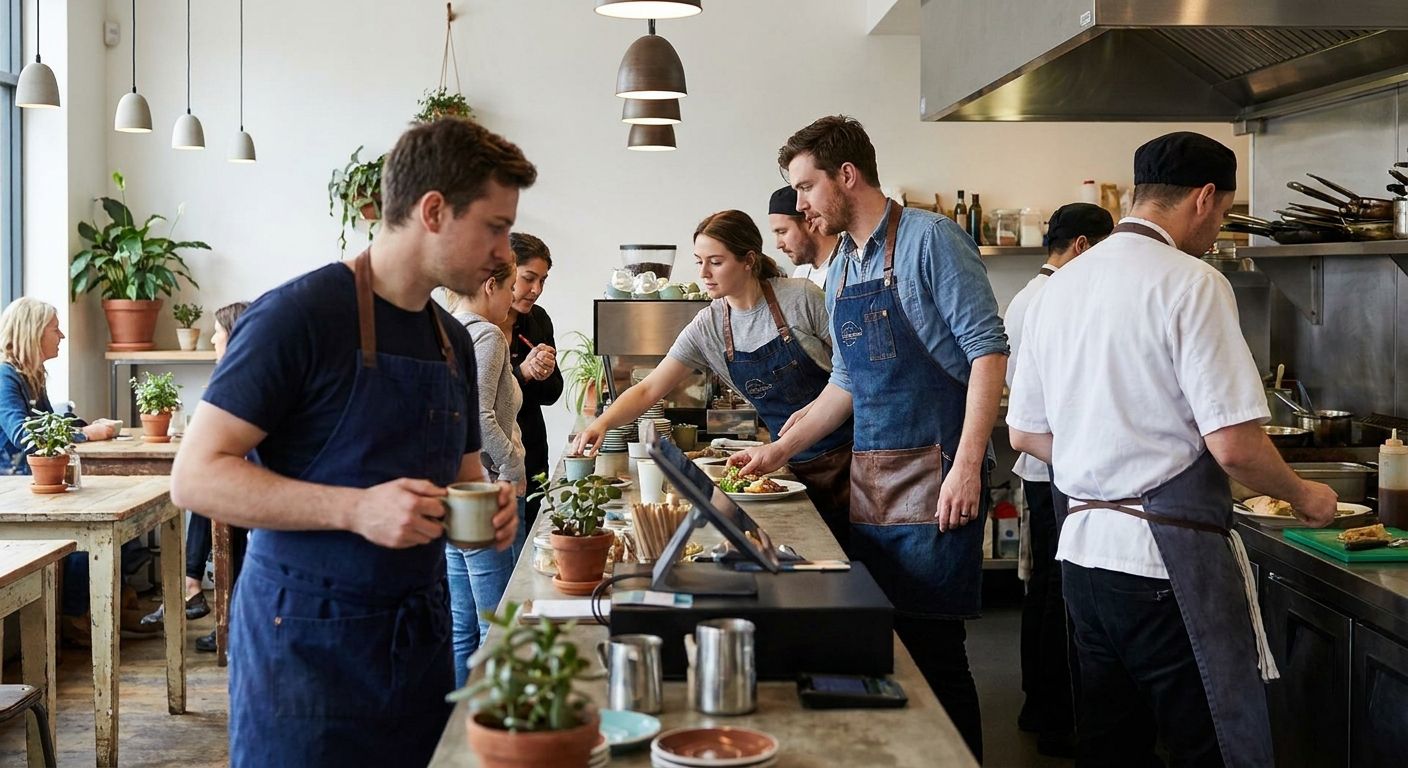
Denim reads well for bakeries, specialty coffee roasters and brunch spots leaning into a craft aesthetic, and it wears in rather than out. It's heavier and warmer than poly-cotton, so it suits front-facing roles more than high-heat kitchen stations. Verdict: Consider if your brand identity leans artisan; Skip if your team works near grills or fryers.
Waterproof or PVC-coated apron — the wet-station pick
Dish pit and bar staff dealing with constant splash need a coated fabric that sheds water instead of soaking through. This style traps heat and isn't breathable, which makes it the wrong choice for anyone standing near an espresso machine or oven. Verdict: Buy for dish and bar stations, Skip everywhere else on the floor.
What to avoid
- One-size straps for a mixed team — a strap length that fits a 5'4" barista chokes a 6'2" kitchen hand. Adjustable straps cost little extra and remove the problem entirely.
- Screen print on dark polyester blends — it looks identical to embroidery on day one and starts flaking by month two or three of commercial washing.
- Thin cotton marketed as "lightweight and breathable" — breathable also means it shows every stain and scorches faster near heat, which isn't a trade worth making for a working apron.
Verdict comparison
| Style | Fabric weight | Best pocket setup | Best station | Verdict |
|---|---|---|---|---|
| Cross-back bib apron | 220gsm poly-cotton | Single chest pocket | Espresso bar | Buy |
| Waist apron | 200gsm poly-cotton | 2-3 pockets | Front of house | Consider |
| Full bib apron with panel | 250gsm+ heavy blend | Reinforced multi-pocket panel | Kitchen | Buy |
| Denim apron | Heavy denim | Single utility pocket | Bakery/specialty coffee | Consider |
| Waterproof/PVC apron | Coated synthetic | Minimal, splash-proof | Dish pit/bar | Buy (wet stations only) |
Coffee is central to most Australian cafe operations, and staff uniforms need to hold up around machines and steam wands daily. If your team also uses branded ceramic mugs for the counter and break room, matching that same brand palette across aprons and drinkware keeps the whole customer-facing look consistent in 2026.
FAQ
What's the best fabric for custom aprons for cafes?
A 220gsm poly-cotton blend is the best fabric for cafe aprons in 2026 because it resists steam, splash and daily commercial washing without thinning out. Lighter 180gsm cotton feels cheaper faster and shows stains under service lighting.
Is embroidery better than screen printing for apron logos?
Embroidery holds up through 100+ industrial washes, while screen print on dark polyester starts cracking after roughly 20-30 washes. For a logo that needs to last the life of the apron, embroidery is the safer choice.
How many pockets should a cafe apron have?
Baristas need one chest pocket for a cloth and thermometer, while front-of-house staff need two to three pockets for an order pad, pen and card reader. Matching pocket count to role, not a one-size design, avoids staff improvising mid-shift.
Are cross-back aprons better than neck-strap aprons?
Cross-back aprons are better for shifts over four hours because they distribute weight across both shoulders instead of concentrating pressure on the neck. Neck-strap styles need constant readjusting during a busy service.
Do restaurant kitchens need a different apron than cafes?
Yes, kitchens need full-length bib aprons with reinforced pocket panels and heavier fabric to handle hot equipment and daily prep work. Front-of-house and barista roles are better served by lighter cross-back or waist styles.
What apron style suits a specialty coffee brand?
Denim aprons suit specialty coffee roasters and bakeries leaning into a craft aesthetic and wear in rather than out over time. They run warmer than poly-cotton, so they're better for front-facing roles than high-heat kitchen stations.
Can custom aprons be branded in bulk for multiple venues?
Yes, hospitality groups running multiple sites commonly order custom aprons in bulk of 100 or more to standardise branding across venues. Ordering one fabric weight and one print method across all locations keeps the look consistent site to site.
Do waterproof aprons work for coffee stations?
No, waterproof or PVC-coated aprons trap heat and aren't breathable, making them the wrong choice near an espresso machine or oven. They're built for dish pits and bar stations dealing with constant splash, not barista roles.
One last thing
The detail most cafe owners miss: staff who wear an ill-fitting apron for more than a few weeks stop wearing it correctly, tying it loosely or letting straps slip, which undoes the whole point of a branded uniform. Fit and strap adjustability matter as much as fabric weight and logo placement — a perfectly branded apron nobody wears properly is worse than no branding at all.