Corporate wellness programs live or die on adoption, and a branded drink bottle that sits in a drawer isn't hydration support — it's landfill with a logo. This guide breaks down what to look for in custom drink bottles for corporate wellness programs in 2026, which formats actually get used daily, and which ones look right in a catalogue but flop on desks.
- Double-wall vacuum steel bottles (500-750ml) win adoption in 2026 wellness programs — Buy.
- Tritan plastic sports bottles are the budget wildcard for high-headcount rollouts — Consider.
- Glass bottles with silicone sleeves suit boutique wellness brands but crack under desk-drop use — Consider carefully.
- Skip thin single-wall PET bottles with paper labels — they peel and taste plastic within weeks.
- Custom drink bottles for corporate wellness need laser-engraved or screen-printed branding, not stick-on labels, to survive daily washing.
Why this matters
A wellness program's success gets measured in habit change, not merchandise handed out. If the bottle a staff member gets on day one is still in use in month six, the branding is doing quiet, repeated marketing work every time it's refilled at the office tap or gym.
Cheap bottles get binned within a term. That's a wasted line item and a missed touchpoint with every employee who was supposed to feel looked after. Getting the material, capacity and branding method right the first time avoids a second order six months later.
Who this is for
This guide is built for HR managers, wellness program coordinators, and internal comms leads at Australian businesses rolling out hydration challenges, gym partnerships, or general staff wellbeing kits in 2026. If you're ordering 50 to 2,000 units for onboarding kits, wellness week giveaways, or annual health challenges, the criteria below apply directly to your brief.
What to look for in custom drink bottles for corporate wellness
Material safety and taste neutrality
Staff will drink from this bottle daily, sometimes with hot beverages, sometimes with electrolyte mixes. BPA-free stainless steel or Tritan plastic won't leach flavour into water after repeated washes — cheap PET will, usually within 4-6 weeks of daily use.
Insulation performance
A hydration challenge only works if people actually refill and drink. Double-wall vacuum insulation keeps water cold for 12-24 hours depending on wall thickness, which matters when the office doesn't have a fridge on every floor.
Capacity matched to hydration targets
Most workplace hydration guidelines sit around 2-2.5 litres a day. A 750ml bottle needs three refills to hit that; a 500ml bottle needs four to five. Pick capacity based on how many refill stations your office actually has, not just what looks good in a group photo.
Branding method durability
Laser engraving and screen printing survive dishwashers and years of handling. Paper or vinyl stick-on labels start peeling within a month of daily washing — exactly the kind of detail that makes a wellness gift look cheap fast.
MOQ and turnaround for staggered rollouts
Wellness programs often onboard in waves — new hires monthly, challenge participants quarterly. Confirm minimum order quantities and turnaround windows before locking in a supplier, especially if you're reordering mid-year rather than placing one bulk buy.
Easy-clean design
Wide-mouth openings and dishwasher-safe lids matter more than any spec sheet number once bottles are in daily rotation. A bottle nobody can clean properly gets replaced with a disposable one within weeks.
Get a wellness bottle quote
Free mockups and free delivery on bulk branded drink bottle orders.
Top picks for corporate wellness programs
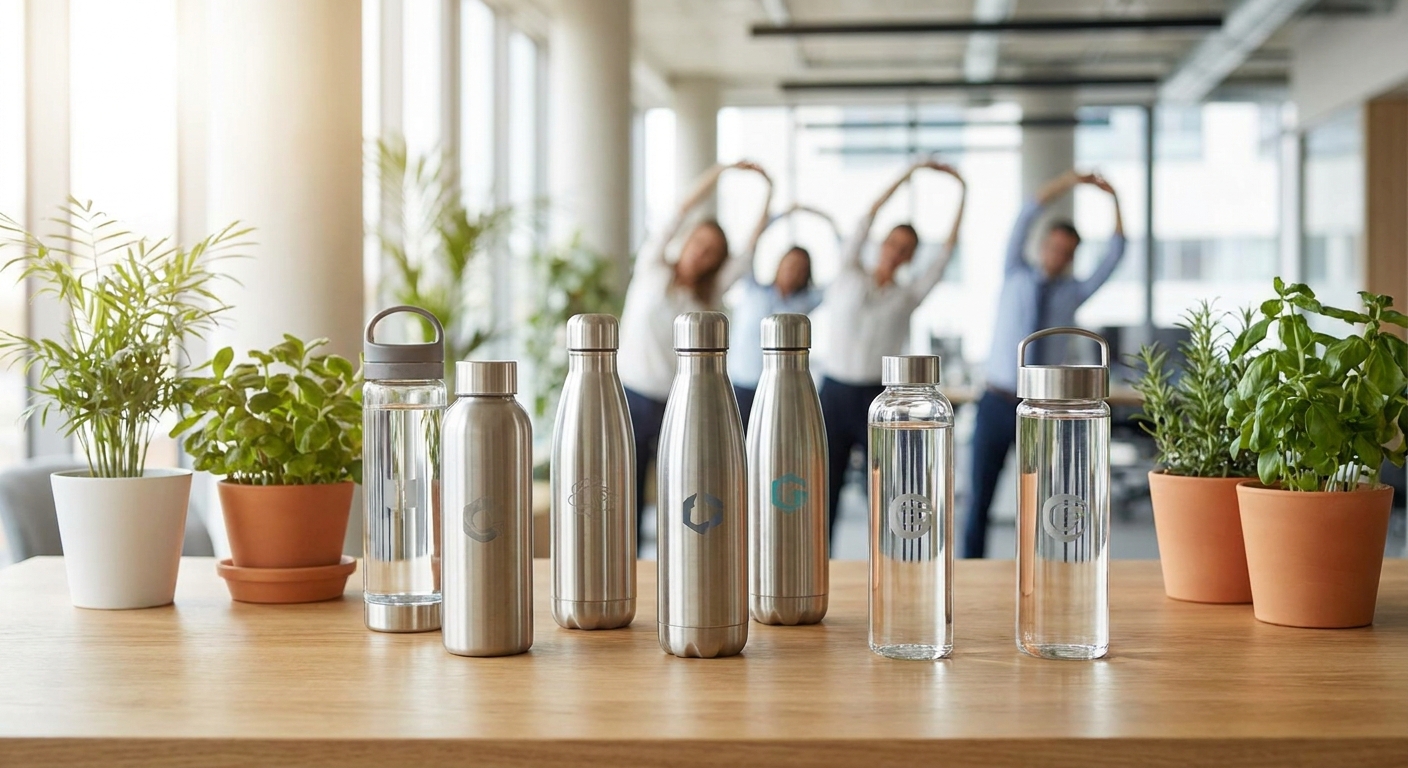
The safe pick — double-wall vacuum steel bottle (500-750ml). Holds temperature for roughly 12 hours cold, survives daily handling, and takes laser engraving cleanly. This is the format most Australian wellness programs default to in 2026 because it works across desk use, gym use, and commute use without complaint. Verdict: Buy.
The budget wildcard — Tritan plastic sports bottle (750ml-1L). Lighter than steel, cheaper per unit, and still BPA-free with a flip-top lid that suits gym and hydration-challenge use. It won't hold temperature the way steel does, so it's a weaker fit for outdoor or field-based staff. Verdict: Consider for high-headcount rollouts where budget per unit matters more than insulation.
The premium pick — glass bottle with silicone protective sleeve. Tastes the cleanest of any material and photographs well for internal comms, which matters if the wellness program leans on social proof or intranet posts. Glass adds breakage risk in bags and on desks, even with a sleeve. Verdict: Consider for office-based teams, skip for field or warehouse staff.
The space saver — collapsible silicone bottle. Packs flat for travel kits and gym bags, useful for programs that include a fitness challenge component. Insulation is close to zero and the silicone can pick up odours over time if not washed properly. Verdict: Consider as a secondary item in a wellness kit, not the primary bottle.
The volume play — 1L+ sports bottle with time markers. Built for hydration challenges that track intake against daily targets, with printed measurement lines down the side. Bulkier to carry, which limits appeal for desk-based staff who'd rather have something smaller. Verdict: Consider for gym-partnership programs specifically, skip for general office kits.
What to avoid
- Thin single-wall PET plastic with a stick-on label. It dents, holds smells, and the label peels in a dishwasher within a month — exactly the wear pattern that makes a wellness gift look like an afterthought.
- Novelty shapes that don't fit standard cup holders or bike cages. Looks distinctive on a table, fails the daily-carry test within a week.
- Bottles with lids that trap moisture and mould. Anything with a straw or flip-top needs a design that fully disassembles for cleaning, or it becomes a hygiene complaint rather than a wellness win.
Verdict comparison
| Format | Insulation | Best capacity | Branding durability | Verdict |
|---|---|---|---|---|
| Double-wall steel | 12-24 hrs cold | 500-750ml | Laser engrave, high | Buy |
| Tritan plastic sports | None | 750ml-1L | Screen print, medium-high | Consider |
| Glass + silicone sleeve | None | 500-600ml | Laser/print, high | Consider |
| Collapsible silicone | None | 500-700ml | Pad print, medium | Consider (secondary) |
| 1L+ marked sports bottle | Low | 1L+ | Screen print, medium-high | Consider (gym programs) |
FAQ
What's the best custom drink bottle for corporate wellness programs in 2026?
A double-wall vacuum-insulated steel bottle in the 500-750ml range is the strongest all-round choice for 2026 wellness programs. It holds temperature for daily desk and gym use and takes laser engraving without wearing off.
Is stainless steel better than plastic for wellness bottle giveaways?
Stainless steel wins on insulation and taste neutrality, while Tritan plastic wins on cost per unit for large rollouts. Choose steel when insulation matters, plastic when headcount and budget are the priority.
How much do custom drink bottles for corporate wellness cost in bulk?
Pricing depends on material, capacity and print method, with steel bottles costing more per unit than plastic sports bottles. Request a bulk quote against your exact headcount and branding needs for an accurate figure.
What's the minimum order quantity for branded wellness bottles?
MOQs vary by supplier and bottle style, and staggered wellness rollouts should confirm reorder quantities before committing to a single bulk buy. Ask about mid-year top-up orders if new hires join throughout 2026.
Do branded drink bottles actually improve wellness program engagement?
A bottle that survives daily use and dishwashing stays in rotation for months, which keeps the brand and the wellness message visible far longer than a one-off giveaway. A bottle that peels or breaks within weeks gets replaced with a disposable cup instead.
What printing method lasts longest on a wellness giveaway bottle?
Laser engraving and screen printing outlast stick-on labels by months in dishwasher and daily-handling conditions. Paper or vinyl labels typically start peeling within four to six weeks of regular washing.
Are glass drink bottles safe for office wellness kits?
Glass bottles with a silicone protective sleeve are safe for desk-based staff but carry higher breakage risk in bags or on the move. They suit office-only programs better than field or warehouse teams.
What capacity drink bottle suits a workplace hydration challenge?
A 750ml to 1L bottle matches most daily hydration targets with two to three refills. Bottles under 500ml require more refills than staff realistically manage during a work day.
One last thing
The detail that gets missed most in 2026 wellness briefs isn't the bottle material — it's the lid. A flip-top or straw lid that can't be fully disassembled for washing turns into a hygiene complaint within a term, regardless of how good the steel or the branding is. Ask about lid design before capacity or colour.